




The life cycle of a star is a cosmic balancing act between the inward pull of gravity and the outward pressure of nuclear fusion. While all stars follow a similar beginning, their ultimate fate is dictated entirely by their initial mass.
🌟 1. Birth: The Stellar Nursery
Every star begins in a Nebula—a vast, cold cloud of gas (mostly hydrogen) and dust.
- Protostar: Gravity causes clumps of gas to collapse. As the material squeezes together, friction generates intense heat. When the core reaches roughly 10 million °C, nuclear fusion ignites.
- Hydrostatic Equilibrium: The star reaches a stable state where the outward radiation pressure from fusion perfectly balances the inward crush of gravity.
☀️ 2. Life: The Main Sequence
This is the longest stage of a star’s life (about 90%). The star fuses hydrogen into helium in its core.
- Mass vs. Longevity: Counterintuitively, massive stars die young.
- Low-mass stars (like our Sun): Burn fuel slowly and can live for 10 billion years.
- High-mass stars: Burn fuel at a furious rate to stay stable and may only live for a few million years.
🍂 3. The Beginning of the End
When a star runs out of hydrogen, the core contracts and heats up, while the outer layers expand and cool.
- Low-Mass Stars: Expand into a Red Giant. They eventually fuse helium into carbon.
- High-Mass Stars: Expand into a Red Supergiant. They are hot enough to fuse heavier and heavier elements: carbon, neon, oxygen, and silicon.
💀 4. Death: Two Divergent Paths
Path A: Low to Medium Mass Stars (The Sun)
- Planetary Nebula: The star becomes unstable and gently ejects its outer layers into space, creating a beautiful, glowing shell of gas.
- White Dwarf: Only the hot, dense core remains. It is roughly the size of Earth but has the mass of the Sun.
- Black Dwarf: Over trillions of years, the white dwarf cools until it no longer emits heat or light (a theoretical stage, as the universe isn’t old enough for any to exist yet).
Path B: High-Mass Stars (The Giants)
- Iron Dead End: Fusion continues until the core turns to iron. Since fusing iron consumes energy rather than releasing it, the outward pressure vanishes instantly.
- Supernova: Gravity wins. The star collapses in a fraction of a second and rebounds in a colossal explosion, shining brighter than an entire galaxy.
- The Remnant: Depending on the remaining mass:
- Neutron Star: An ultra-dense core where protons and electrons have merged into neutrons. A teaspoon of this material would weigh a billion tons.
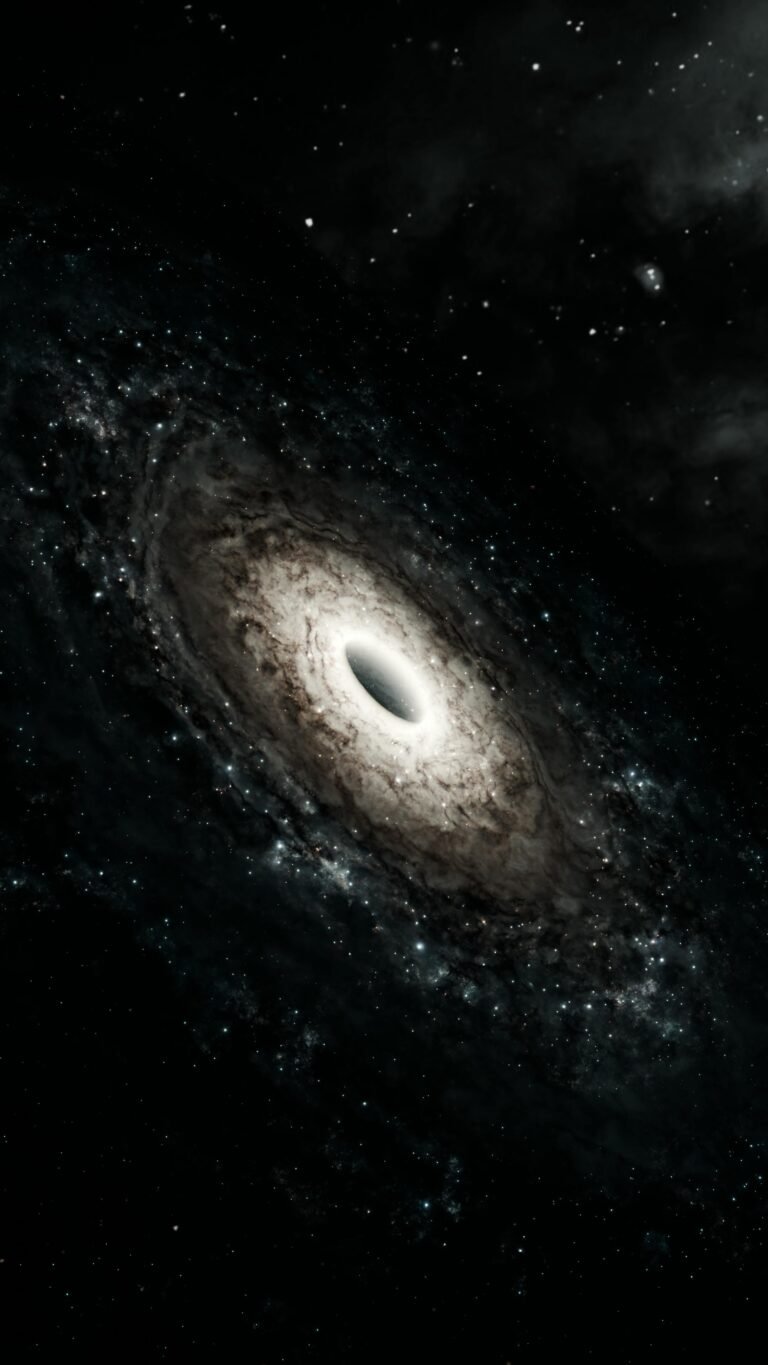
- Black Hole: If the remaining core is more than 3 times the mass of the Sun, not even neutron pressure can stop the collapse. It vanishes into a point of infinite density.
🔄 5. The Cosmic Recycling
The “death” of a star is actually a rebirth for the universe. The heavy elements created in the cores of stars (like the oxygen we breathe and the iron in our blood) are scattered by supernovae and planetary nebulae. This enriched material eventually collapses into new nebulae, forming the next generation of stars and planets.
- Compare the life cycles of the Sun vs. Betelgeuse
- Summarize how different elements are created in stars
- Calculate the remaining lifespan of our Sun