








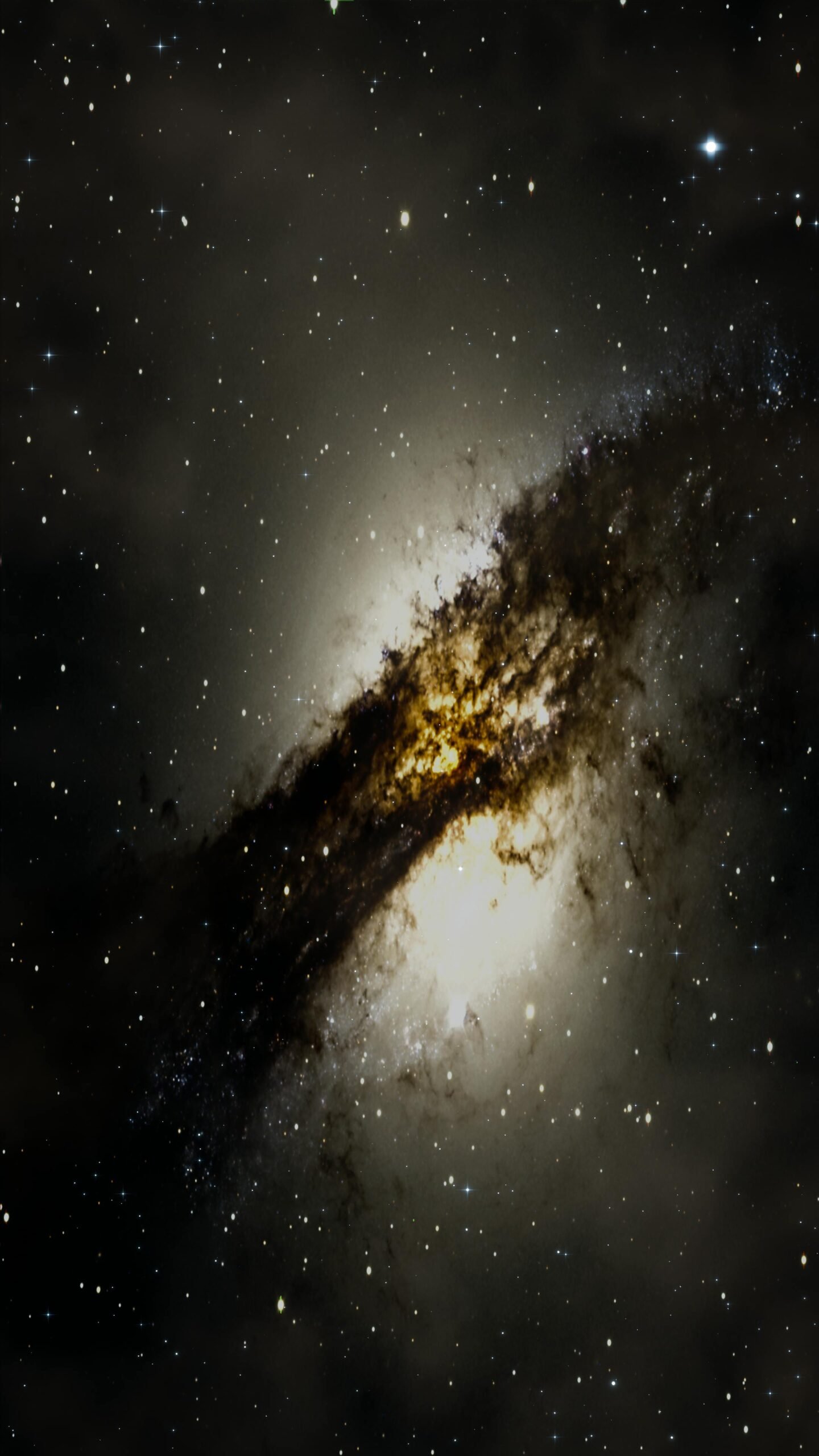
In March 2026, our understanding of binary star systems has shifted from seeing them as “cosmic rarities” to recognizing them as the majority. Approximately 50% of Sun-like stars and over 80% of massive stars exist in binary or multiple systems.
These systems are not just two stars orbiting each other; they are dynamic environments where stars “steal” mass, merge, and trigger the universe’s most violent explosions.
🎡 1. The Configuration: Roche Lobes
The evolution of a binary system depends entirely on how close the stars are. Every star is surrounded by a mathematical boundary called a Roche Lobe—the region where its gravity is dominant.
- Detached Binaries: Both stars are well within their Roche lobes. they evolve independently, similar to single stars.
- Semi-Detached Binaries: One star expands (becoming a giant) and fills its Roche lobe. Its outer layers begin to “spill” over a point called the Lagrangian Point (L1) onto its companion.
- Contact Binaries: Both stars fill their Roche lobes and share a common envelope of gas. They look like a glowing cosmic peanut.
🧪 2. Mass Transfer and Its Consequences
When stars interact, the “standard” rules of stellar evolution are broken.
- The Algol Paradox: In some systems, the less massive star is more “evolved” (a giant) than its heavier companion. This happens because the heavier star evolved faster, filled its Roche lobe, and dumped most of its mass onto the smaller star, “swapping” roles.
- Accretion Disks: The stolen gas doesn’t fall directly into the companion. Instead, it forms a white-hot accretion disk, which can emit intense X-rays.
- Blue Stragglers: In star clusters, we often find blue stars that look much younger than their neighbors. These are “vampire stars” that have sucked fresh hydrogen from a companion, effectively resetting their nuclear clock.
💥 3. Extreme End-Stages
Binary interactions lead to several unique cosmic phenomena that single stars cannot produce.
Type Ia Supernovae
If a White Dwarf has a companion star, it can siphon off enough mass to cross the Chandrasekhar Limit (1.4 solar masses). At this point, the entire White Dwarf ignites in a thermonuclear explosion. Because these always happen at the same mass, they are “standard candles” used to measure the expansion of the universe.
X-ray Binaries
These consist of a normal star orbiting a Neutron Star or a Black Hole. The extreme gravity of the remnant pulls gas from the star, heating it to millions of degrees and blasting out X-rays.
Common Envelope Evolution
In 2026, research into Common Envelope phases is a “hot topic.” This occurs when a massive star swallows its smaller companion. The friction of the companion moving through the giant’s atmosphere can eject the entire envelope, leaving a tight binary that will eventually merge.
🌊 4. Gravitational Waves and Mergers
The ultimate fate of many close binaries—especially those containing two Neutron Stars or Black Holes—is a merger.
- Spiraling In: As they orbit, they ripple the fabric of spacetime, releasing Gravitational Waves.
- Kilonovae: When two Neutron Stars merge, they create a “Kilonova,” an explosion that produces the majority of the universe’s heavy elements, like gold and platinum.
📊 Binary System Evolution Summary
| Stage | Mechanism | Result |
| Early Life | Mutual Orbit | Stable Main Sequence stars. |
| Interaction | Roche Lobe Overflow | Mass transfer; Algol-type systems. |
| Cataclysm | Mass Accretion | Novae or Type Ia Supernovae. |
| Final State | Gravitational Radiation | Binary Mergers (Gravitational Waves). |
- Compare Type Ia and Type II supernovae
- Summarize the 2026 LIGO-Virgo-KAGRA merger observations
- Explain the different Lagrangian points in binary systems