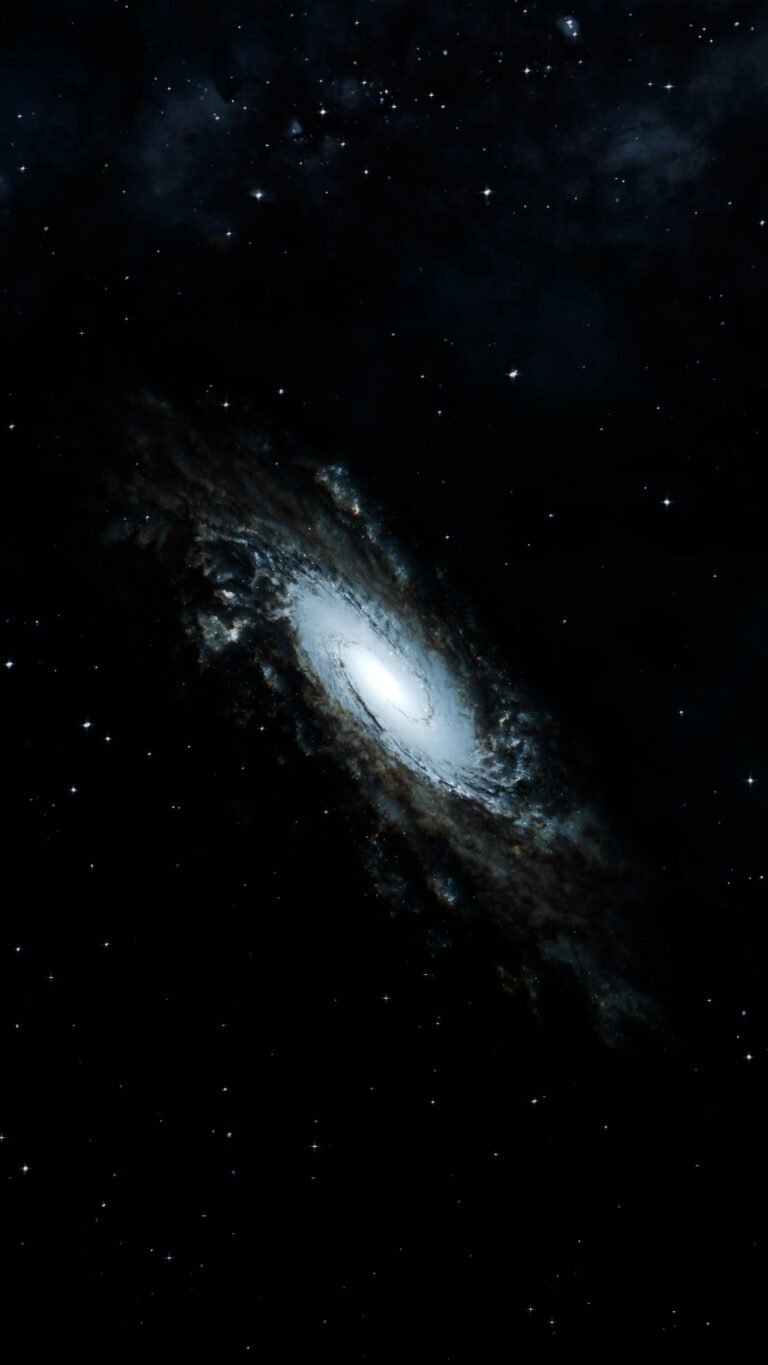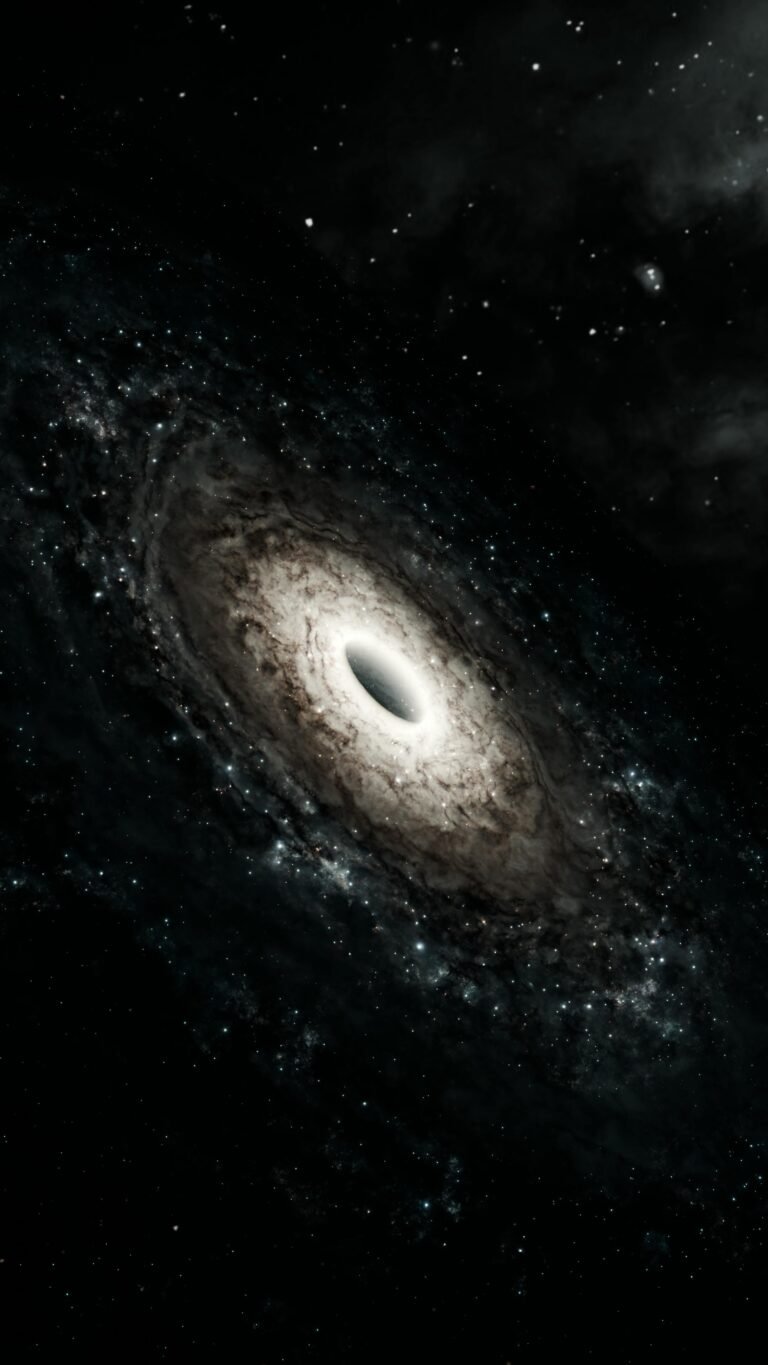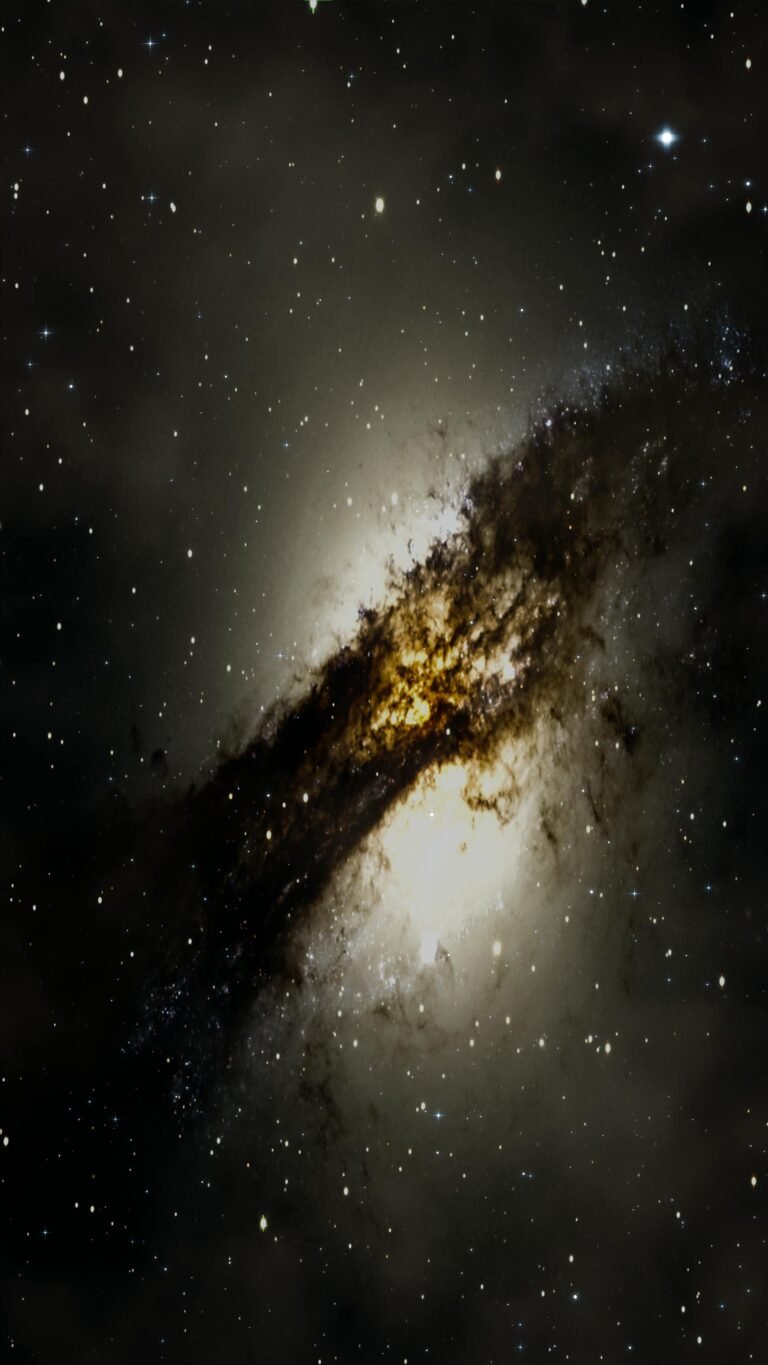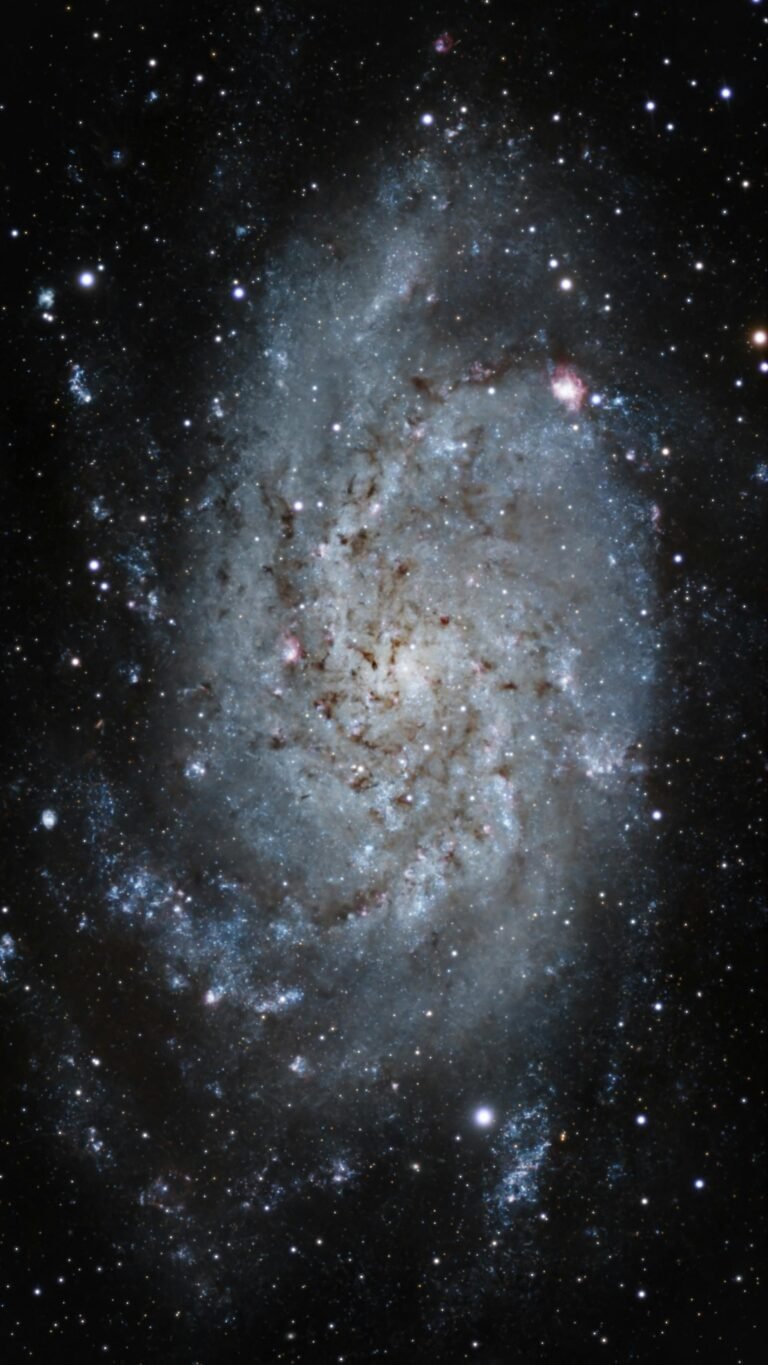









In March 2026, Active Galactic Nuclei (AGN) are recognized as the most powerful “engines” in the universe. An AGN is a compact region at the center of a galaxy that emits a massive amount of energy across the entire electromagnetic spectrum—from radio waves to X-rays—often outshining all the billions of stars in its host galaxy combined.
⛽ 1. The Engine: Accretion Power
The luminosity of an AGN is not produced by stars, but by the gravitational energy of a Supermassive Black Hole (SMBH).
- The Accretion Disk: As gas, dust, and stars are pulled toward the black hole, they don’t fall in straight. Instead, they orbit, forming a flat disk. Friction and extreme gravity heat this disk to millions of degrees, causing it to glow brilliantly.
- The “Torus”: Surrounding the disk is often a thick “doughnut” of cooler dust and gas (the torus) that can obscure our view of the center depending on the angle at which we see the galaxy.
- Relativistic Jets: In some AGN, intense magnetic fields channel a portion of the infalling matter away from the black hole’s poles. These particles are accelerated to nearly the speed of light, extending thousands of light-years into intergalactic space.
🌟 2. Quasars: The Brightest of the Bright
Quasars (Quasi-Stellar Radio Sources) are the most extreme sub-type of AGN.
- Cosmic Beacons: Quasars were primarily found in the early universe. Because they are so bright, they act as “flashlights” that allow 2026 astronomers to study the gas and matter that existed between us and the quasar billions of years ago.
- Redshift: Quasars are found at high redshifts, meaning they are moving away from us rapidly as the universe expands. The light we see from a typical quasar today was often emitted when the universe was less than a quarter of its current age.
📊 The AGN “Family Tree”
The different names for AGN often depend more on our viewing angle than on different physical structures (the Unified Model).
| Type | Appearance | Key Feature |
| Quasar | Point-like, extremely bright | Active in the very early universe; visible from billions of light-years away. |
| Seyfert Galaxy | Spiral galaxy with a bright core | Lower luminosity than quasars; host galaxy is clearly visible. |
| Blazar | Highly variable, intense | We are looking directly down the throat of the relativistic jet. |
| Radio Galaxy | Massive elliptical galaxy | Characterized by giant “lobes” of radio emission from jets hitting intergalactic gas. |
🌬️ 3. Galactic Feedback: Shaping the Cosmos
In 2026, the study of AGN focuses heavily on Feedback—how the energy from the black hole affects the rest of the galaxy.
- The “Kill” Switch: The radiation and jets from an AGN can push cold gas out of the galaxy or heat it up so much that it can no longer collapse to form stars.
- Regulating Growth: This explains why the most massive galaxies in the universe aren’t even larger; the AGN at their centers effectively “shut off” their growth once they reached a certain size.
🔭 4. The 2026 Perspective: Sgr A* and M87*
While our own Milky Way’s black hole (Sagittarius A*) is currently “quiet” (a quiescent black hole), 2026 research from the Event Horizon Telescope (EHT) suggests it may have been a powerful AGN in the past. We see evidence of this in the Fermi Bubbles—giant structures of high-energy radiation extending above and below our galactic plane, remnants of a “feeding frenzy” millions of years ago.
- Compare the power output of a Quasar to a typical galaxy
- Summarize the 2026 EHT findings on black hole jet formation
- Explain the ‘Unified Model’ of Active Galactic Nuclei