






When a star with more than 8 times the mass of our Sun reaches the end of its life, it doesn’t fade away quietly. Instead, it triggers a catastrophic collapse that creates the densest objects in the known universe: Neutron Stars and Black Holes.
🏗️ 1. The Pre-Collapse “Onion”
A massive star stays stable by fusing progressively heavier elements in its core. By its final days, the star resembles an onion with layers of fusion:
- Outer layers: Hydrogen and Helium.
- Inner layers: Carbon, Neon, Oxygen, and Silicon.
- The Core: Iron.
The Dead End: Iron is the most stable nucleus. Fusing iron consumes energy rather than releasing it. The moment the core turns to iron, the outward radiation pressure stops, and gravity—which has been waiting for millions of years—instantly wins.
💥 2. The Core Collapse Supernova
In less than a second, the iron core (roughly the size of Earth) collapses to the size of a city.
- Photodisintegration: Intense gamma rays blast the iron nuclei apart.
- Neutronization: Electrons and protons are crushed together to form neutrons and neutrinos.
- The Bounce: The core becomes so dense that the collapsing outer layers “hit” it and bounce off, creating a shockwave that blows the rest of the star apart in a Type II Supernova.
🎡 3. The Remnant: Neutron Stars
If the remaining core is between 1.4 and 3 times the mass of the Sun (the Chandrasekhar and Tolman-Oppenheimer-Volkoff limits), it becomes a Neutron Star.
- Composition: It is essentially a giant atomic nucleus made almost entirely of neutrons.
- Density: A single sugar-cube-sized piece of a neutron star would weigh 1 billion tons.
- Pulsars: Many neutron stars spin rapidly (hundreds of times per second) and emit beams of radiation. As they rotate, these beams sweep across Earth like a cosmic lighthouse.
- Magnetars: Some possess magnetic fields a quadrillion times stronger than Earth’s.
🕳️ 4. The Final Collapse: Black Holes
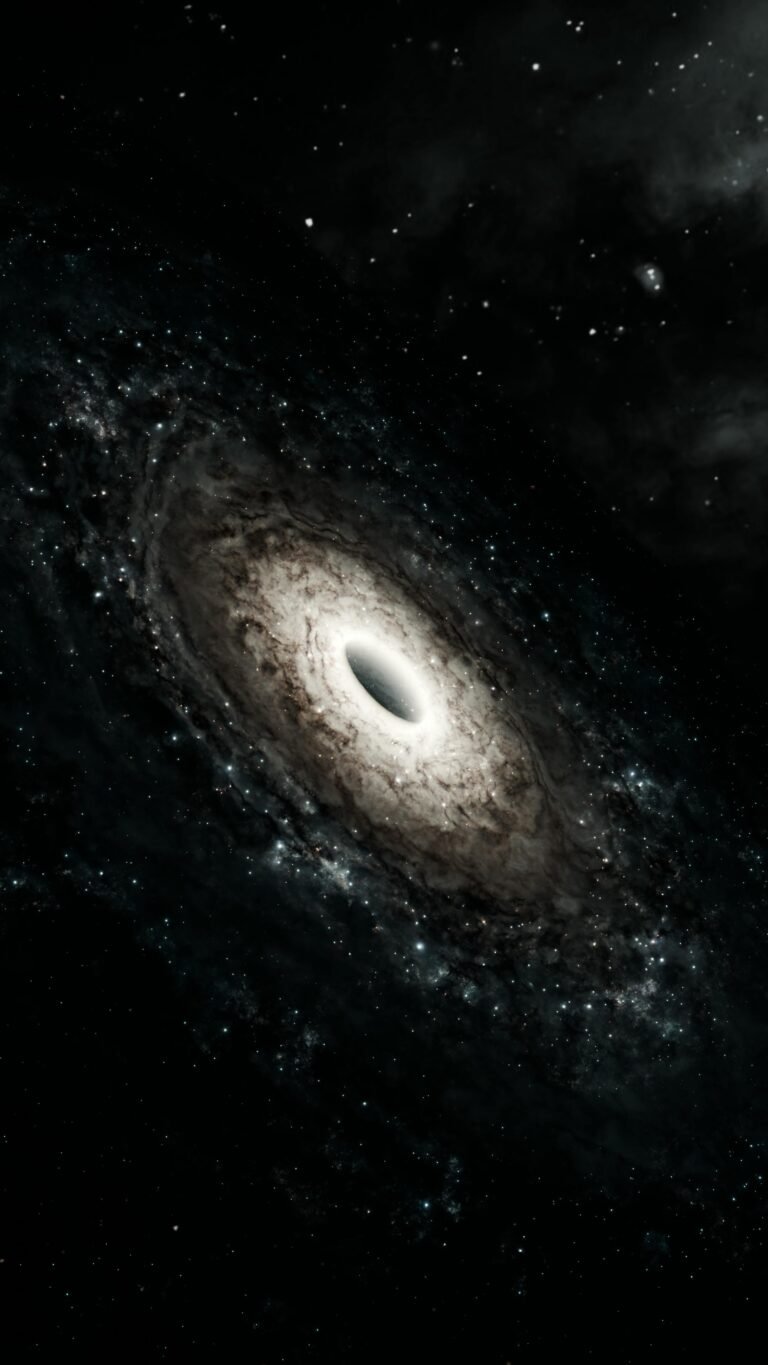
If the remaining core is more than 3 times the mass of the Sun, even the “neutron degeneracy pressure” cannot stop gravity.
- The Singularity: The core collapses past the point of no return, crushing all its mass into a point of zero volume and infinite density.
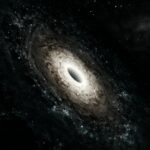
- The Event Horizon: This is the boundary surrounding the singularity. Once anything (including light) crosses this threshold, the escape velocity exceeds the speed of light.
- Spaghettification: Due to extreme tidal forces, an object falling toward a black hole is stretched vertically and squeezed horizontally long before it reaches the center.
📊 Comparison of Stellar Remnants
| Property | White Dwarf | Neutron Star | Black Hole |
| Progenitor Mass | < 8 $M_{\odot}$ | 8–25 $M_{\odot}$ | > 25 $M_{\odot}$ |
| Remnant Mass | < 1.4 $M_{\odot}$ | 1.4–3 $M_{\odot}$ | > 3 $M_{\odot}$ |
| Radius | ~6,000 km (Earth) | ~10–15 km (City) | 0 (Singularity) |
| Supported By | Electron Degeneracy | Neutron Degeneracy | Nothing (Gravity wins) |