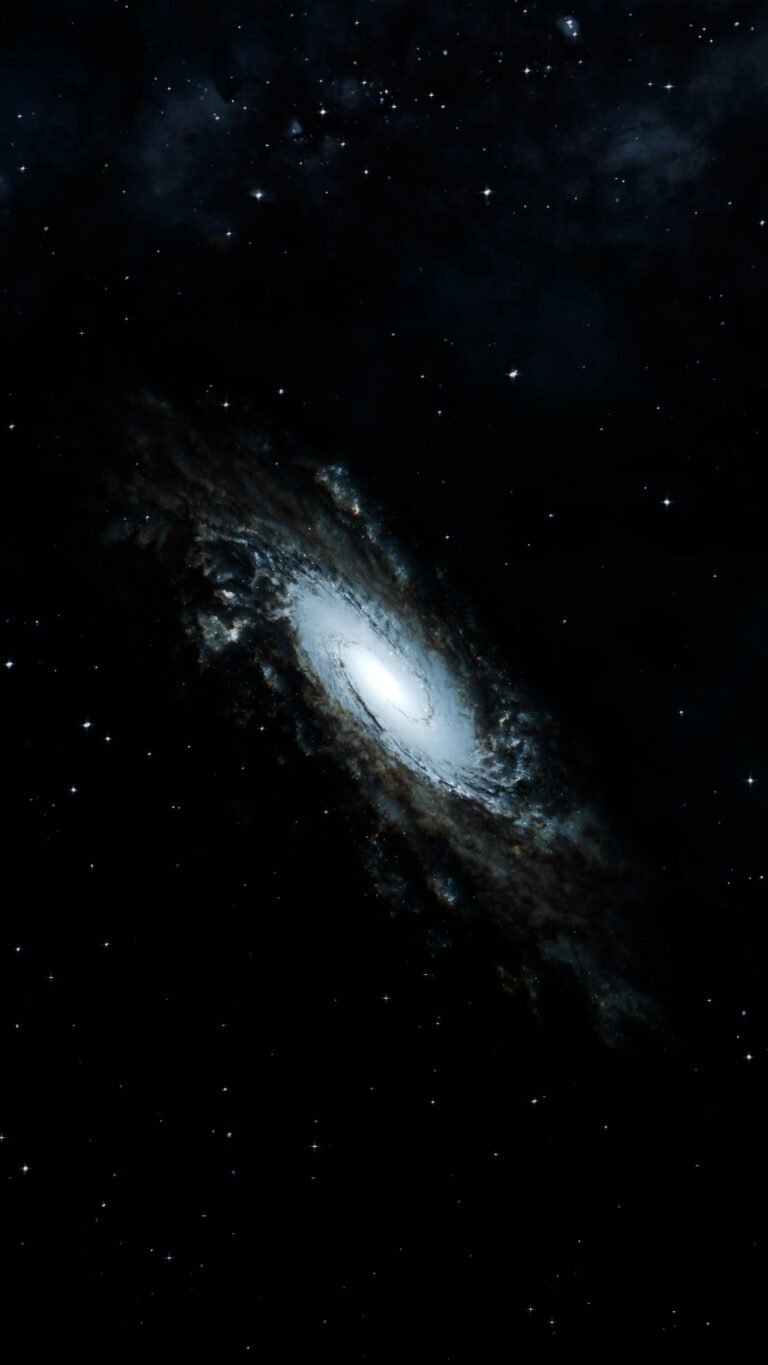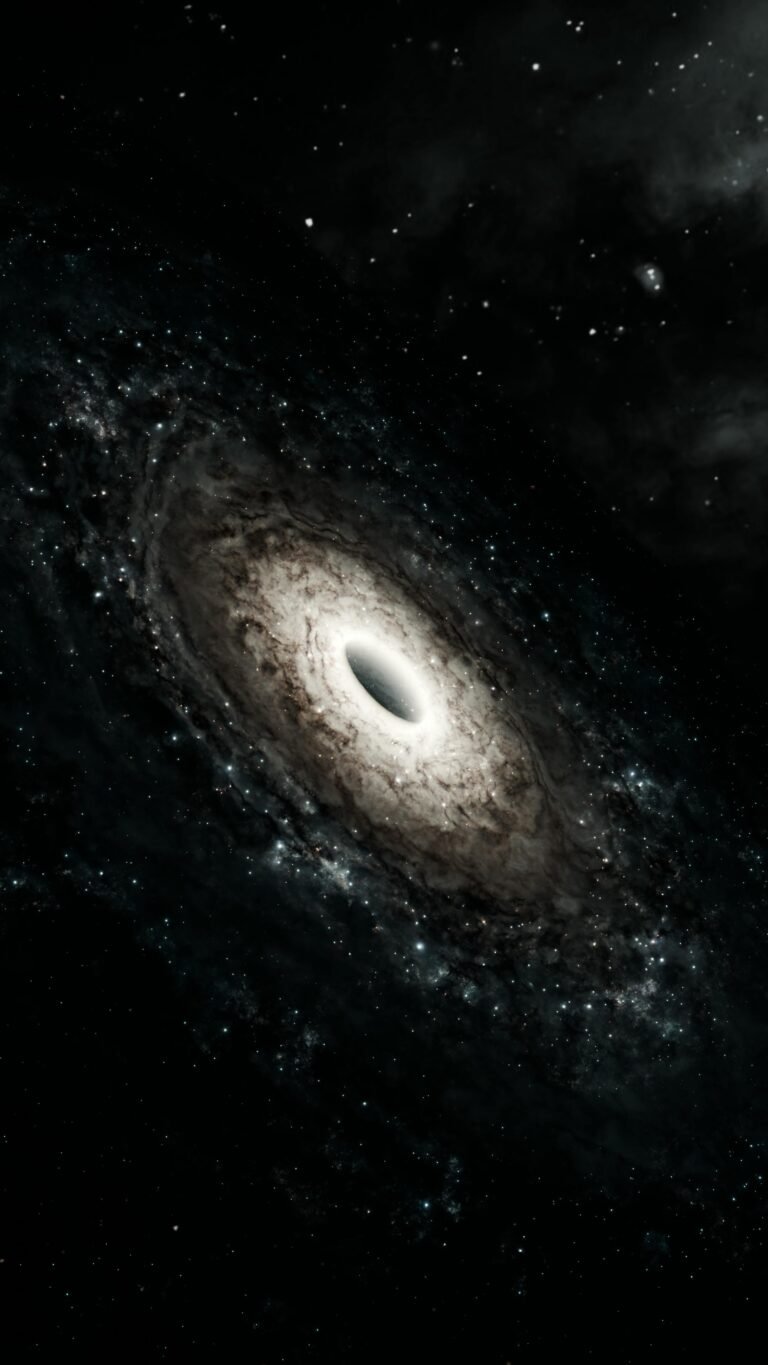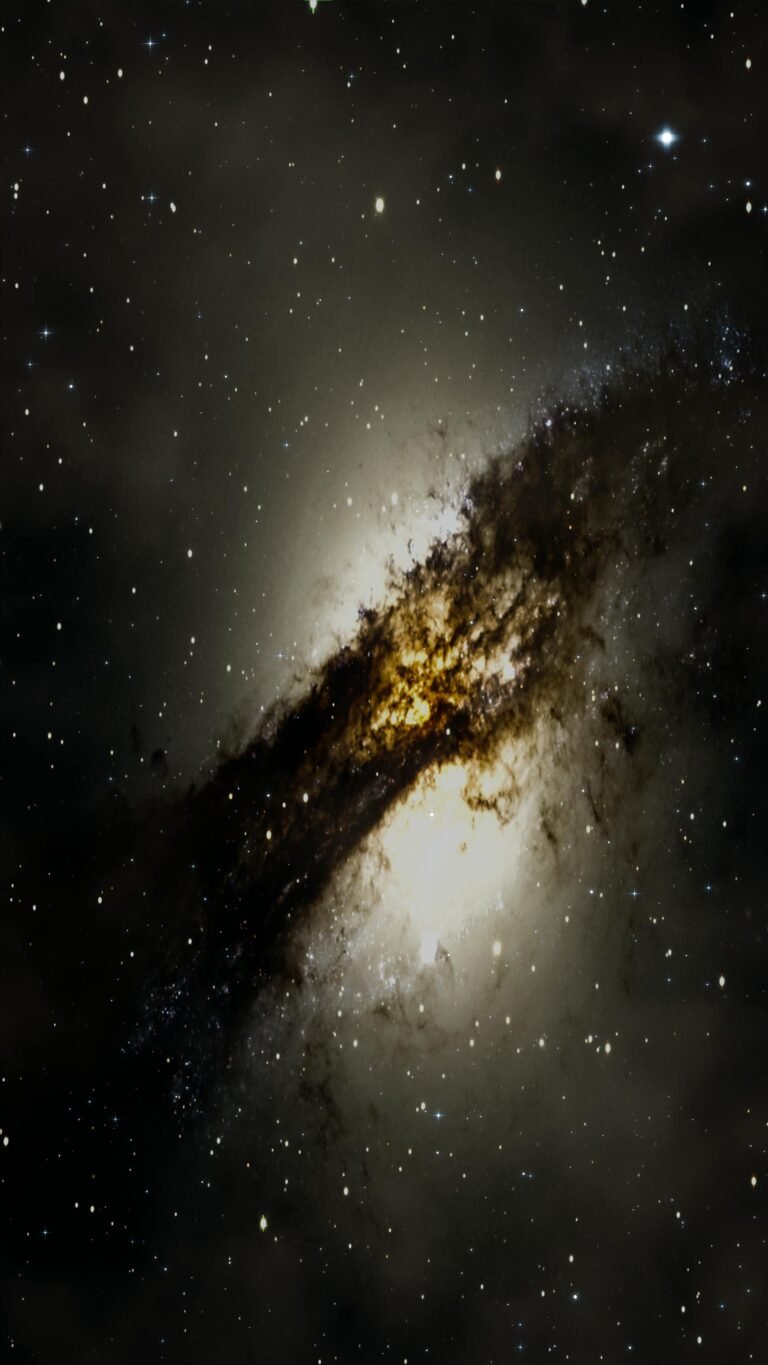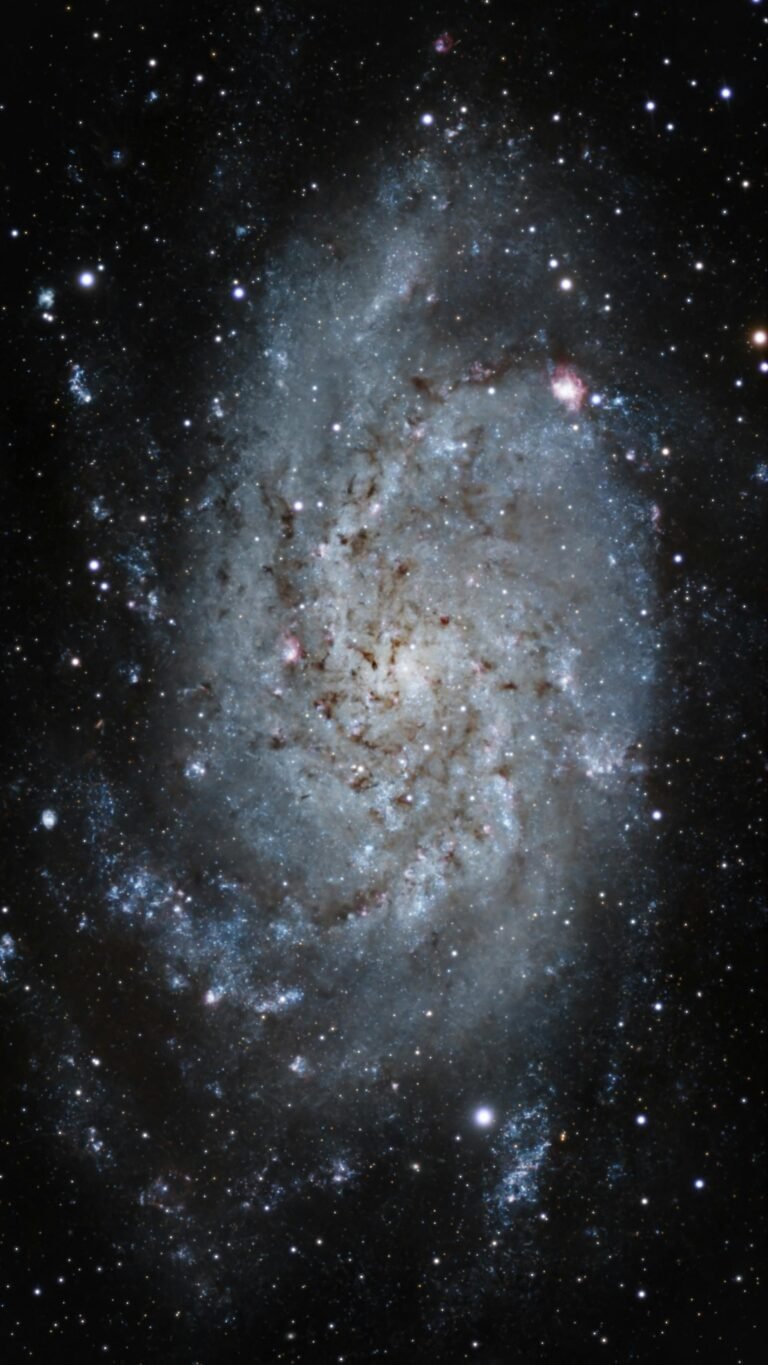









In the core of nearly every massive galaxy, including our own Milky Way, lies a Supermassive Black Hole (SMBH). While stellar-mass black holes are a few times the mass of the Sun, SMBHs range from millions to billions of solar masses.
Despite taking up a tiny fraction of a galaxy’s volume, these “gravitational anchors” play a dominant role in how galaxies grow, age, and die.
🌌 1. The Relationship: Co-Evolution
One of the most striking discoveries in modern astronomy is the M-sigma relation. Observations show a direct correlation between the mass of an SMBH and the velocity dispersion (the “bulk”) of the stars in its host galaxy’s bulge.
- Growing Together: This suggests that galaxies and their central black holes evolve in lockstep. You cannot have a massive galaxy without a proportionally massive black hole at its heart.
- The Seeds: Astronomers are still debating whether SMBHs formed from the “bottom-up” (merging stellar black holes) or “top-down” (direct collapse of massive gas clouds in the early universe).
⚡ 2. Active Galactic Nuclei (AGN) and Quasars
When an SMBH is actively “feeding” on surrounding gas and stars, it becomes an Active Galactic Nucleus (AGN).
- Accretion Disk: Matter spiraling into the black hole heats up to millions of degrees due to friction and gravity, emitting vast amounts of electromagnetic radiation.
- Quasars: The most luminous version of an AGN. A single quasar can shine 1,000 times brighter than its entire host galaxy, making it visible from the edge of the observable universe.
- Relativistic Jets: Magnetic fields can funnel some of the incoming matter into powerful jets that shoot out from the poles at nearly the speed of light, extending far beyond the galaxy itself.
🛑 3. Galactic Feedback: The “Thermostat”
SMBHs act as a cosmic thermostat through a process called Feedback. This is arguably their most important role in galactic evolution.
- Heating the Gas: The radiation and jets from an active SMBH heat up the interstellar gas within the galaxy.
- Quenching Star Formation: Cold gas is required to form stars. By heating the gas or blowing it out of the galaxy entirely, the SMBH “quenches” star formation.
- The Result: This prevents galaxies from growing indefinitely large and explains why many massive galaxies are “red and dead”—filled with old stars and lacking the cold gas needed to create new ones.
📊 Comparing the Milky Way’s Heart to Others
| Feature | Sagittarius A* (Our SMBH) | M87* (First Imaged) |
| Mass | ~4.3 Million $M_{\odot}$ | ~6.5 Billion $M_{\odot}$ |
| Activity Level | Quiescent (Quiet) | Active (Large Jet) |
| Distance | 27,000 Light Years | 55 Million Light Years |
| Host Galaxy | Milky Way (Spiral) | M87 (Giant Elliptical) |
🤝 4. Galactic Mergers
When two galaxies collide, their central SMBHs eventually sink toward the center of the new, larger galaxy.
- Binary Black Holes: They orbit each other for millions of years, creating a “binary” system.
- Gravitational Waves: As they finally merge, they release a colossal amount of energy in the form of ripples in spacetime. In 2026, international collaborations like the LISA mission preparations are focused on detecting these low-frequency waves from SMBH mergers.
- Compare the M87* and Sagittarius A* Event Horizon Telescope images
- Summarize the M-sigma relation in galactic evolution
- Explain the ‘Final Parsec Problem’ in black hole mergers