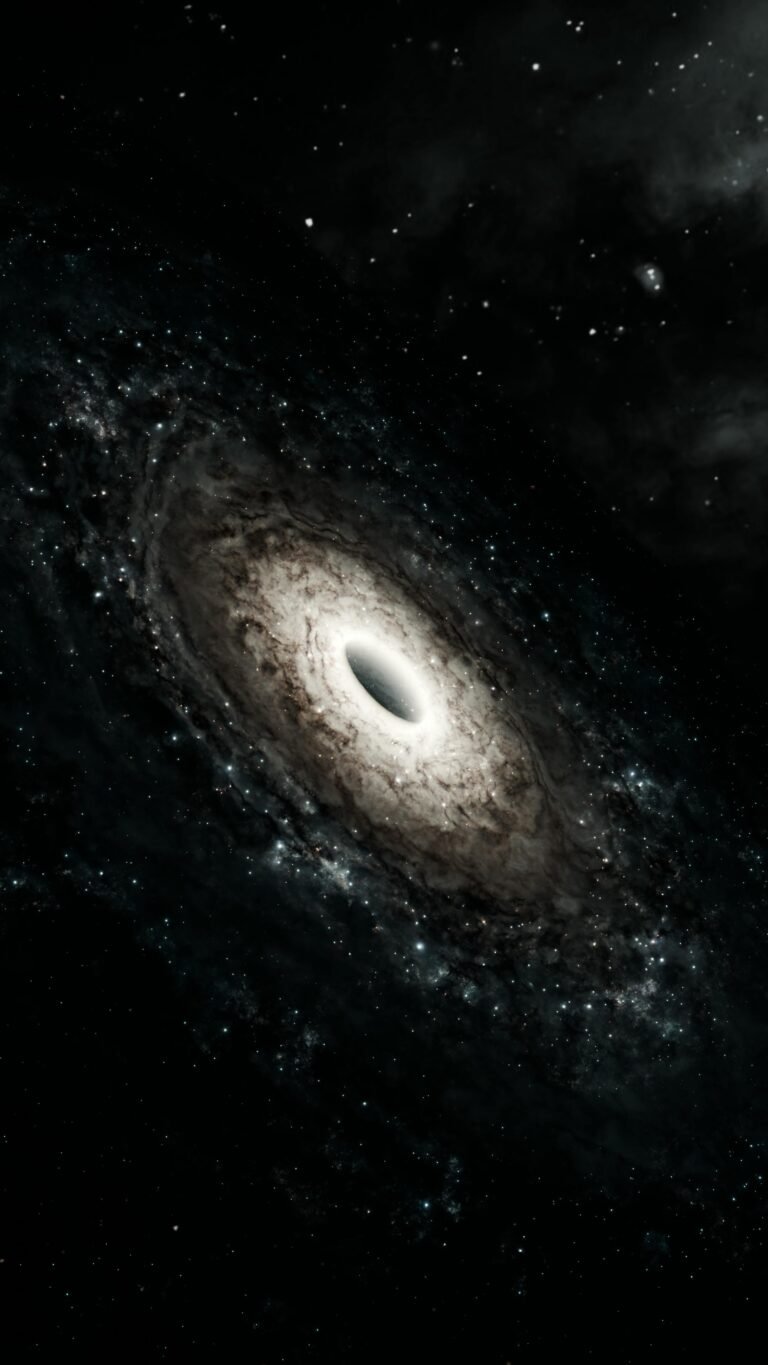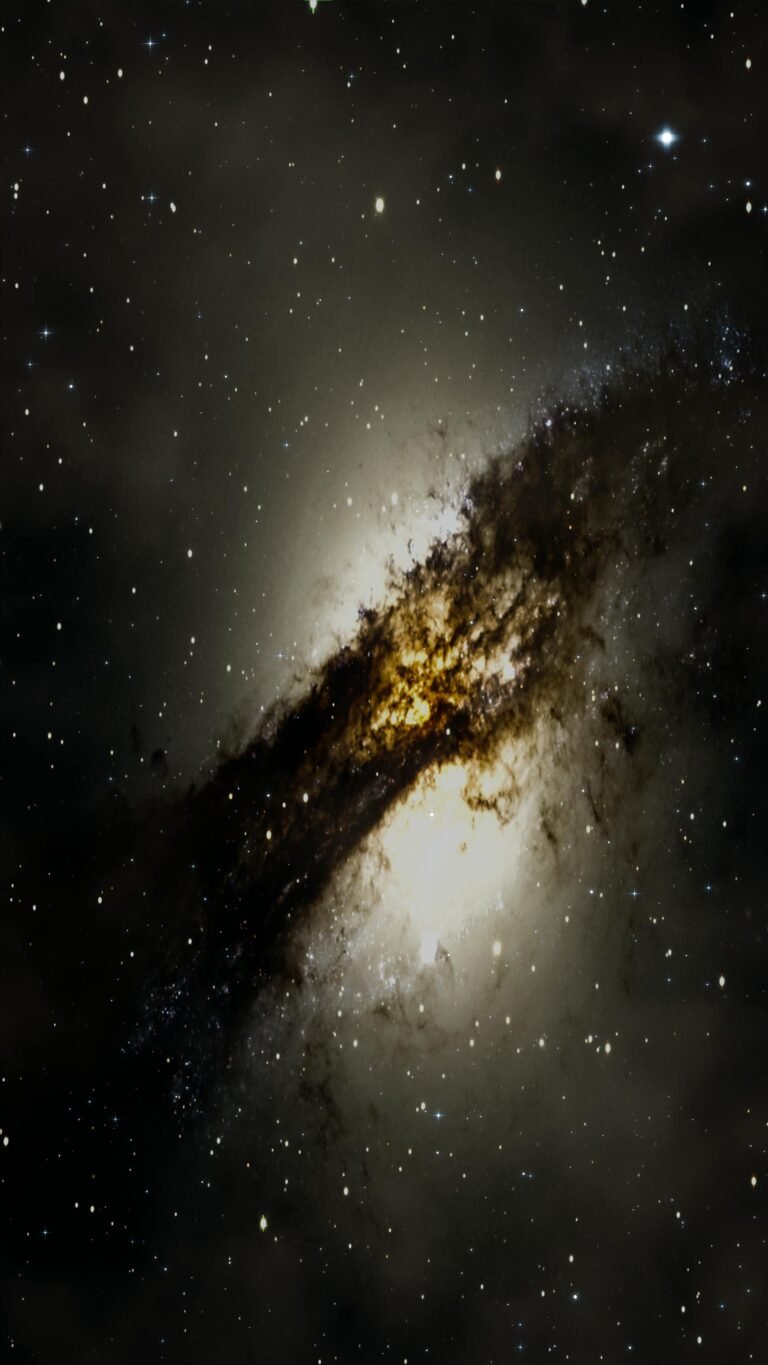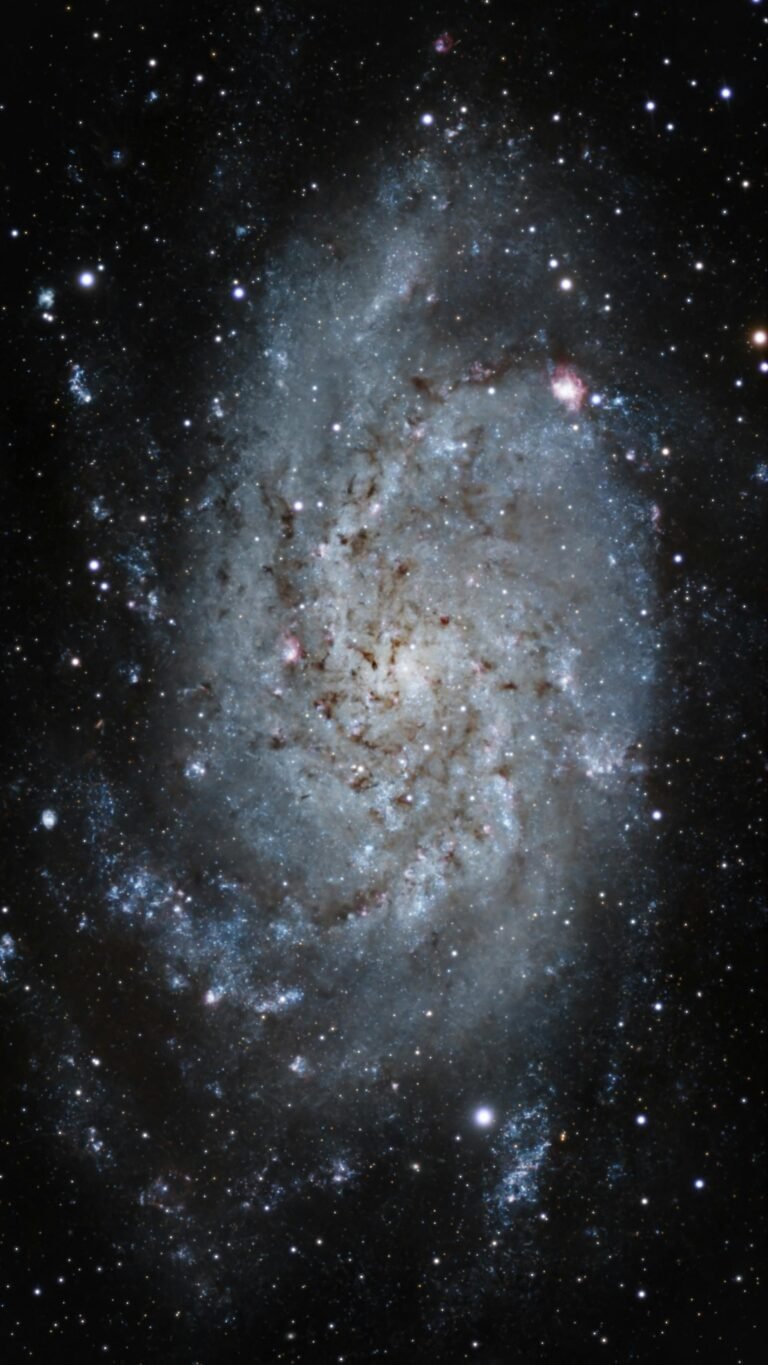



In March 2026, the “Large-Scale Structure” of the universe is viewed not as a collection of isolated objects, but as a vast, interconnected network known as the Cosmic Web. This structure is the result of 13.8 billion years of gravity acting on tiny density fluctuations from the Big Bang.
🕸️ 1. The Anatomy of the Cosmic Web
The universe is organized into four distinct types of regions, shaped by the distribution of dark matter:
- Nodes (Galaxy Clusters): These are the most massive gravitationally bound structures in the universe, containing hundreds or thousands of galaxies. They sit at the intersections of cosmic filaments.
- Filaments: Long, thin “bridges” of gas and dark matter that connect clusters. Most of the universe’s “normal” (baryonic) matter is hidden here as hot, diffuse gas.
- Sheets (Walls): Flattened structures that form the boundaries of immense empty spaces. The most famous is the “Sloan Great Wall,” one of the largest structures ever mapped.
- Voids: Colossal, nearly empty spherical regions that make up the vast majority of the universe’s volume. They contain very few galaxies and act as “anti-gravity” bubbles, pushing matter toward the filaments.
🏢 2. Galaxy Clusters: The Cosmic Cities
Galaxy clusters are the “urban centers” of the Cosmic Web. They are unique laboratories for 2026 astrophysics because they contain three major components:
- Galaxies: Only about 1–3% of a cluster’s mass.
- Intracluster Medium (ICM): A superheated plasma ($10^7$ to $10^8$ K) that fills the space between galaxies. It glows brightly in X-rays and contains more mass than all the stars in the cluster.
- Dark Matter: Approximately 80% of the cluster’s mass, providing the gravitational “glue” that keeps the fast-moving galaxies from flying away.
📏 3. Mapping the Structure (2026 Data)
As of early 2026, our maps of the large-scale structure have achieved “sub-percent” precision thanks to several key projects:
- DESI (Dark Energy Spectroscopic Instrument): Has mapped the 3D positions of over 40 million galaxies, using the “Baryon Acoustic Oscillations” (frozen sound waves from the Big Bang) as a standard ruler to measure the universe’s growth.
- Euclid Space Telescope: Currently providing the highest-resolution maps of the “dark” side of the Cosmic Web by observing how dark matter shapes the distribution of 2 billion galaxies.
- The “Hubble Tension”: 2026 researchers are using the large-scale structure to see if the universe expands at different rates in different directions, which would signal “new physics” beyond Einstein’s General Relativity.
📊 Hierarchy of Cosmic Structure
| Scale | Structure | Typical Size |
| Galactic | Galaxy | 100,000 Light-Years |
| Group | Local Group | 10 Million Light-Years |
| Cluster | Virgo Cluster | 50 Million Light-Years |
| Supercluster | Laniakea | 500 Million Light-Years |
| Cosmic | The Observable Universe | 93 Billion Light-Years |
🌌 4. Laniakea: Our Local Supercluster
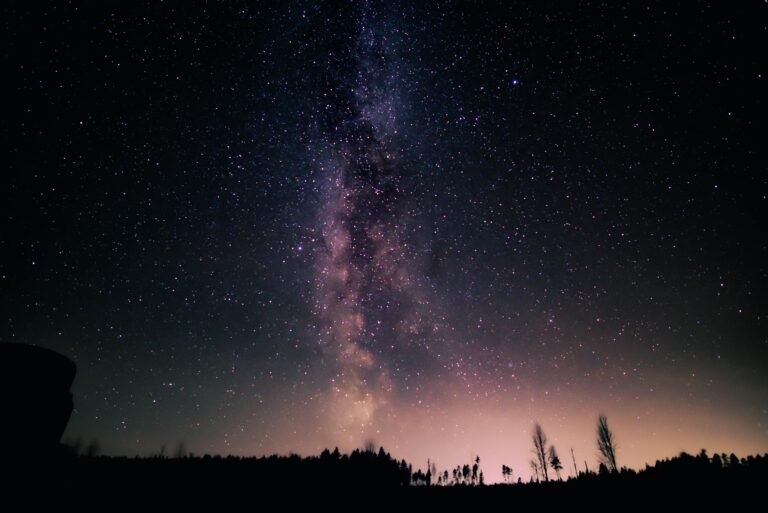
The Milky Way is part of a minor filament leading toward a massive node called the Great Attractor. In 2014, this region was defined as the Laniakea Supercluster (“Immeasurable Heaven”). In 2026, we now understand that Laniakea is likely just a small lobe of an even larger structure currently being mapped, sometimes referred to as the “South Pole Wall.”
💡 The 2026 Perspective: The Fate of the Web
Because of Dark Energy, the Cosmic Web is currently being stretched. In the far future, the filaments will snap, and the voids will expand until galaxy clusters become isolated “islands” in an infinite, empty ocean, unable to see or interact with any other structures in the universe.